Planetary Optimist
A hardware-software system that turns urban planters into biodiversity sensors, educational installations, and a city-wide game.
Planetary Optimist was an experimental urban biodiversity monitoring system developed at Google X. Smart planters equipped with cameras and sensors were deployed across public spaces in Poznań, Warsaw and New York to collect pollinator data while engaging the public with the global biodiversity crisis happening around them.
- Role
- Lead Designer and Researcher
- Scope
- Hardware + Software + Coordination
- Client
- Google X
- When
- 2022
02Problem
Cities lack evidence to justify investment in green infrastructure and the data that would provide it sits invisible to the people who walk past it every day. Urban residents want to connect with local ecosystems but have no accessible way in. The challenge: design a system that collects meaningful biodiversity data while giving the public a reason to engage with it.
03Approach
I joined as an independent design contractor and led the project end-to-end: from insect habitat research to physical structure to public-facing digital experience, coordinating the full production and partnership chain needed to get everything built, placed, and running.
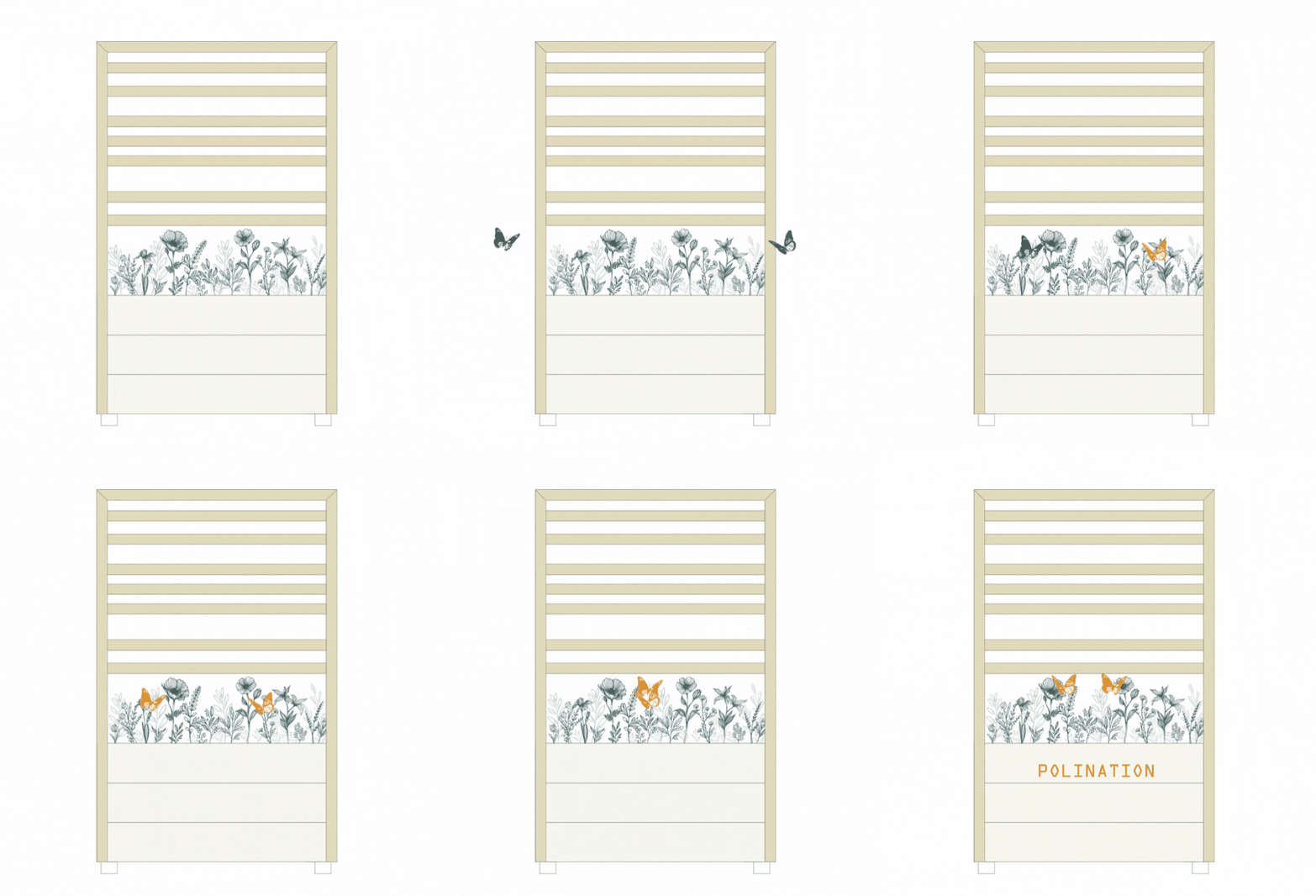
The result was a layered system: planters designed simultaneously as insect habitat and data collectors, a physical data visualization built into their exterior frames, a mobile PWA for deeper exploration, and a city-wide unlock mechanic connecting all locations — each layer dependent on the others working.


Scope of work


04Challenges
_Designing for insects
Plants, colors, materials, habitats — everything had to be chosen around specific pollinators. Lavender and phacelia for bees and bumblebees, echinacea and catmint for butterflies. Purple, blue, yellow, colors that work for insect vision. Water-based non-toxic paints. Brushwood, pine cones, bark built into the structure as insect housing. And underneath it all: a false bottom concealing the Raspberry Pi, cameras, and sensors — the planter serving two completely different purposes in the same physical form.
_Hardware that had to disappear
The sensors were the point of the whole project. Raspberry Pi units, cameras, and sensors need ventilation, maintenance access, and rain protection, but the technology couldn't be visible for safety reasons. A shallow planter inside a deeper container left a sealed cavity below soil level: metal enclosure, ventilated with protected openings, cables routed through conduits. Maintenance access without disassembly, weatherproofing without making the object look like infrastructure.
_Turning data into a reason to stop
Raw biodiversity data means nothing to someone walking past. Each planter's exterior frame displayed a bar chart sourced from Our World in Data — different dataset on each planter, different colors and heights. Scanning the QR code revealed what the chart actually showed. Scrolling further unlocked that specific planter's live data: which pollinators visited today, activity patterns over time. The map at the bottom showed every planter in the city, but each planter's view was locked until someone scanned the QR on the next one. You had to move through the city to unlock the full picture.
05Outcome
The digital layer: PWA
The PWA was the answer to the physical structures hiding biodiversity data. Planetary Optimist online presented a description of the project. It presented:
_A rendered version of the physical bar chart
Each planter showed different data from Our World in Data: biodiversity loss by continent, species decline by category, habitat destruction over time — revealing the dataset behind the frame.
_Local data
Live sensor readings from that specific planter: which pollinators were detected today, activity patterns over time.
_Navigation
A city map connecting all planters, with each location's view locked until discovered by scanning on-site. The gamification wasn't points or badges, but knowledge itself, withheld until earned by showing up.
10+
Locations across Poznań, Warsaw and New York
5+
External partners coordinated (Allegro, Stary Browar, Local wineries, Universities)
1
Google X patent filed
06Reflection
Data contributed to habitat optimisation research with Poznań University of Life Sciences and PCSS. The project concluded as a completed Google X pilot. Designing for a non-human user first (insects) made the human experience better. Hardware constraints forced visual decisions I wouldn't have reached through screen-first thinking. Running the full production chain as an independent contractor, with a limited budget and a tight timeline, taught me more about early-stage product development than any other project I've worked on.
If I did it again
Start research a month earlier to maximize data collection time. Build the first prototype myself before involving specialists. Delegate execution more aggressively from the start.
07Process Summary
Research and early concept
- Researched insect behavior, flora, materials
- Created initial drawings and sketches based on found references
- Ideated on gamification strategies
- Back to sketches with refined ideas
- Explored directions for the online platform
Prototyping and testing
- Designed the structure and 3D model of it
- Built and placed a prototype in the botanical garden
- ↺ Improved structure design based on prototype testing (especially hiding tech)
- ↺ Iterated again after sensor equipment changed in size multiple times
Digital design development
- Finalised hardware structure + designed custom diagrams for each planter
- ↺ Adapted casing designs for two different sensor types
- Developed the progressive web app and tested it with real users
- ↺ Redefined the UI from "flower power" style to a more modern, minimal visual identity
Production and deployment
- Built and deployed 6 planters in Poland, 5 in the USA
- Ran the project across 10 active months, tracing biodiversity through seasons